Skip to product information
1 of 1

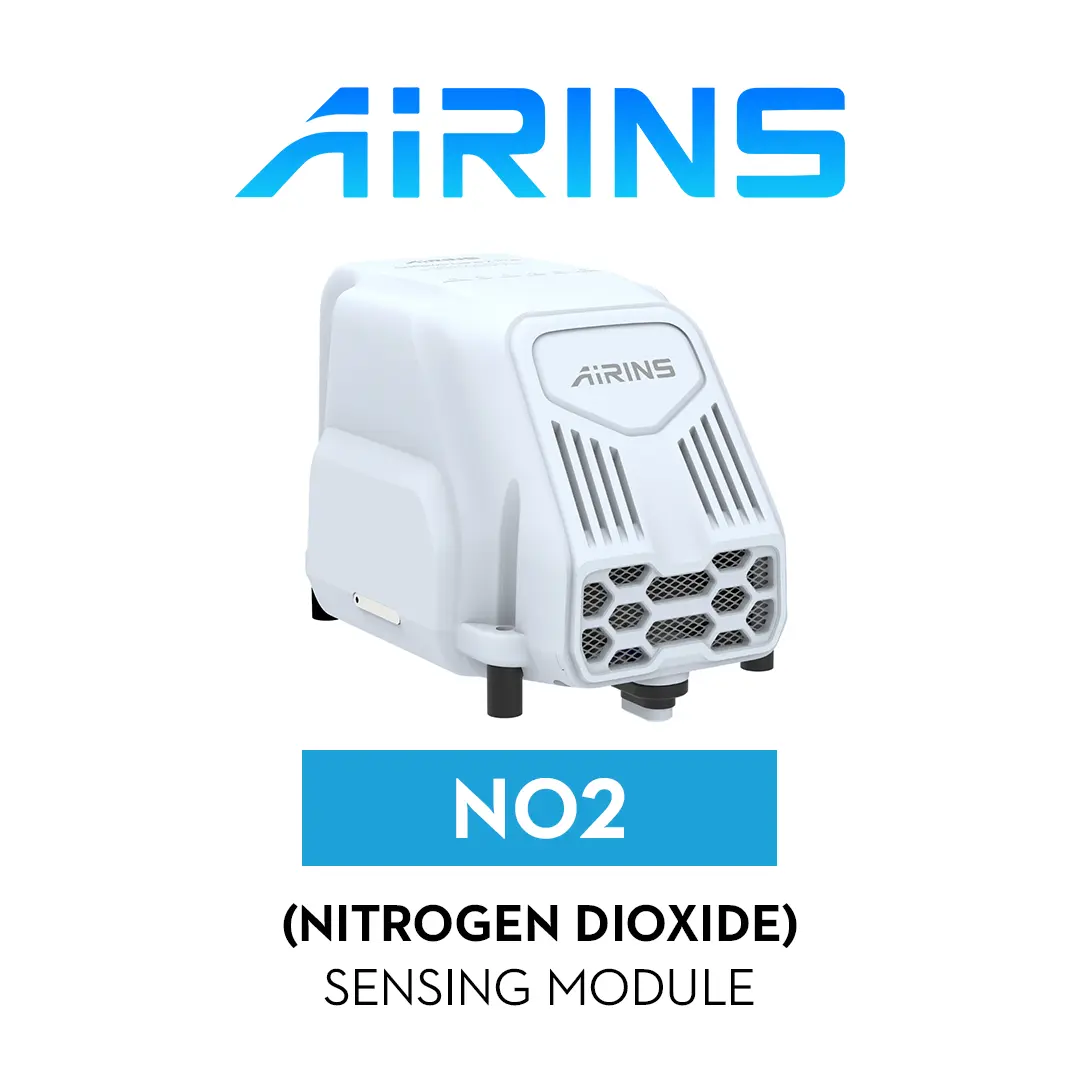
AIRINS Sniffer4D NO2 Sensing Module

AIRINS Sniffer4D NO2 Sensing Module

Regular price $1,643.00
Regular price Sale price $1,643.00
Sale Sold out
  • Electrochemical sensor delivers standalone nitrogen dioxide readings fleet wide
  • Ten ppb detection limit flags low level NO2 events
  • Wide linear range spans trace through elevated NO2 levels
  • Sub sixty second response keeps pace with fleet routes
  • Onboard humidity correction standardizes accuracy across a fleet
  • One ppb resolution resolves fine nitrogen dioxide shifts precisely
  • Twenty four month life supports standardized fleet wide deployment
  • Single slot footprint preserves flexibility for other modules
  • Compatible with O3+NO2 module for full oxidant breakdown
View full details
  • Description
  • Specifications
  • In the Box
  • FAQ

Sniffer4D NO2 Sensing Module: Standardize Independent Nitrogen Dioxide Detection Across Your Fleet

The Sniffer4D NO2 Sensing Module gives fleet programs a standalone nitrogen dioxide reading, distinct from the combined value the O3+NO2 module reports, using a single electrochemical sensor in one Base Unit slot.

This module's application range, spanning HAZMAT response and ship fuel sulfur monitoring alongside general air quality work, makes it a common standard for programs covering port, industrial, and emergency response sites across a fleet. Standardizing it alongside the O3+NO2 module lets programs back-calculate ozone concentration wherever both modules are deployed together.

Key Features and Benefits

  • Electrochemical sensor: delivers a standalone nitrogen dioxide reading across every unit.
  • Detection limit of 10 ppb: flags low level NO2 events fleet wide.
  • Linear range to 11 ppm: spans trace through elevated nitrogen dioxide levels.
  • Response under 60 seconds: keeps pace with programmed fleet flight routes.
  • On-chip humidity correction: standardizes accuracy across a distributed sensor fleet.
  • 1 ppb resolution: resolves fine nitrogen dioxide concentration shifts precisely.
  • 24 month rated life: supports standardized deployment across a fleet's lifecycle.
  • Single slot footprint: preserves flexibility for other modules in the array.
  • O3+NO2 compatible:
  • Detection principle: electrochemistry
  • Linear range: 0 to 11 ppm
  • Limit of detection: 10 ppb
  • Repeatability: <4% FS
  • Overall response time (t90): <60 seconds (0-2 ppm)
  • Display resolution: 1 ppb
  • On-chip proprietary humidity correction algorithm
  • Warm-up time from cold start: ≈2 minutes
  • Sensitivity drift: -20 to -40%/year (laboratory environment)
  • Zero drift: 0 to 20 ppb/year (laboratory environment)
  • Estimated service life: >24 months
  • Operating temperature: -30 to 40°C — note: may require zero-point readjustment due to changes in operating temperature or working environment
  • Operating humidity: 15 to 85% RH
  • 1x AIRINS Sniffer4D NO2 Sensing Module
How is this different from the O3+NO2 module for fleet planning purposes?

This module delivers a standalone nitrogen dioxide reading with no ambiguity about the source gas, while the O3+NO2 module reports a combined oxidant value that mixes both gases into one number. Fleets that only need NO2 data should standardize on this module alone. Programs needing both O3 and NO2 individually should standardize both modules together across the same units, calculating O3 as the combined reading minus the NO2 value.

Can this module run alongside the O3+NO2 module on the same aircraft?

Yes, both modules can occupy separate slots in the same Base Unit, since each only uses one of the five available slots. Running them together across a fleet lets you back-calculate individual ozone concentration on every flight where both modules are installed. This is a common configuration for programs needing a full oxidant breakdown rather than a single combined value.

What missions is this module most commonly standardized for across a fleet?

Beyond general air quality monitoring, this module is specifically suited to HAZMAT response and ship fuel sulfur content monitoring, making it a common standard for port, industrial, and emergency response programs. Fleets covering these mission types often standardize this module across every unit rather than mixing configurations. Dronefly can help you determine if this fits your program's typical mission profile.

Does this module need periodic recalibration across a distributed fleet?

The published specifications list a sensitivity drift of -20 to -40 percent per year and a zero drift of 0 to 20 ppb per year under laboratory conditions, with possible zero-point readjustment needed after significant temperature or environment changes. We don't have a defined recalibration interval from AIRINS beyond these figures, so for long-term fleet deployments, reach out to Dronefly or AIRINS directly to establish a maintenance schedule.

Does each aircraft in the fleet need its own Base Unit to run this module?

Yes. Each NO2 Sensing Module installs into its own Sniffer4D Nano 2 Plus Base Unit, which connects natively to the Matrice 4D and 4TD, with integration kits available separately for the Matrice 400, Matrice 4E and 4T, and Matrice 350 and 300. Dronefly can help plan Base Unit and module procurement to keep your fleet's configuration standardized.