Skip to product information
1 of 1

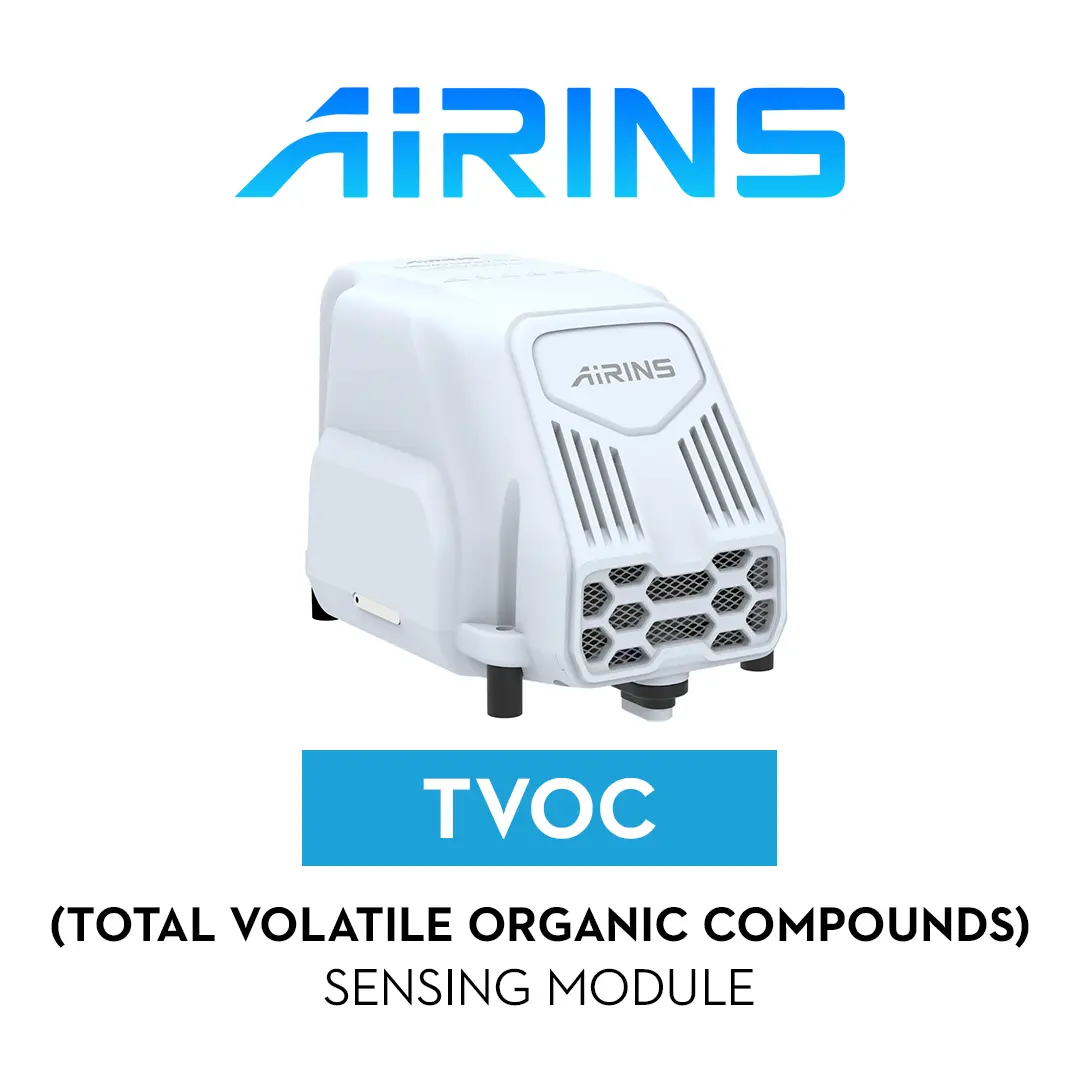
AIRINS Sniffer4D Total Volatile Organic Compounds (TVOC) Sensing Module

AIRINS Sniffer4D Total Volatile Organic Compounds (TVOC) Sensing Module

Regular price $4,917.00
Regular price Sale price $4,917.00
Sale Sold out
  • Photoionization sensor delivers rapid total volatile organic compound readings
  • Low ppm detection limit flags low level VOC events
  • Wide linear range spans trace through elevated VOC concentrations
  • Sub three second response keeps pace with inspection flights
  • Fine resolution resolves subtle VOC concentration shifts precisely
  • Five thousand working hour life supports extended deployment cycles
  • Wide temperature tolerance performs across hot and cold sites
  • Humidity stable readings hold consistent accuracy across sites
  • Single slot footprint preserves flexibility for other modules
View full details
  • Description
  • Specifications
  • In the Box
  • FAQ

Sniffer4D TVOC Sensing Module: Add Sub-3-Second VOC Detection to Your Sensing Setup

Photoionization detection sets the Sniffer4D TVOC Sensing Module apart from the electrochemical modules in the rest of the lineup, giving programs a sub-3-second reading for total volatile organic compounds.

Because the module ships calibrated to isobutylene by default, programs targeting other VOC types need to adjust its sensitivity correction factor before relying on the reading. Its stability across 0 to 75 percent relative humidity keeps data consistent whether a deployment site runs dry or humid.

Key Features and Benefits

  • Photoionization sensor: delivers rapid total volatile organic compound readings in flight.
  • Detection limit of 0.02 ppm: flags low level VOC events reliably.
  • Linear range to 50 ppm: spans trace through elevated VOC concentrations.
  • Response under 3 seconds: keeps pace with fast moving inspection flights.
  • 0.01 ppm resolution: resolves fine VOC concentration shifts with precision.
  • 5000 working hour life: supports extended deployment across repeated missions.
  • Wide temperature tolerance: performs from -40 to 55 degrees across sites.
  • Humidity stable readings: consistent accuracy up to 75 percent RH conditions.
  • Single slot footprint: preserves flexibility for other modules in the array.

The TVOC Sensing Module gives environmental, oil and gas, and HAZMAT programs a fast way to screen for volatile organic compounds without a long response wait. Its humidity stable readings keep data consistent across varied deployment conditions.

Dronefly supplies the TVOC Sensing Module ready to pair with your Sniffer4D Nano 2 Plus Base Unit and can help set the correct sensitivity correction factor for your target compound. Order the TVOC Sensing Module through Dronefly and add fast VOC detection to your sensing setup.

  • Detection principle: photoionization detection (PID);
  • Target gases: total volatile organic compounds (TVOC) with ionization potential energies <10.6eV;
  • Linear Range: 0~50 ppm (isobutylene);
  • Limit of Detection: 0.02 ppm;
  • Repeatability: <4 %FS;
  • Response time (t90): <3 s (diffusion mode);
  • Display Resolution: 0.01 ppm;
  • On-chip proprietary, enabling better data quality in wide temperature and humidity ranges;
  • Warm-up time from a cold start: ≈5minutes;
  • Estimated service life: 5000 working hours;
  • Operating temperature: -40~55 °C;
  • Operating humidity: 0~95 %RH;
  • Humidity has almost no effect on the measurement in 0~75 %RH;
  • The default target gas is isobutylene. To measure other types of VOC, users need to adjust the sensitivity correction factor of the module.

For general environmental monitoring, oil & gas leak detection, and HAZMAT response.

  • 1x AIRINS Sniffer4D Total Volatile Organic Compounds (TVOC) Sensing Module
Can this module detect VOCs other than isobutylene?

The module's default calibration targets isobutylene, the standard reference gas for its 0 to 50 ppm range. To measure other volatile organic compound types accurately, its sensitivity correction factor needs to be adjusted. Dronefly can walk you through that adjustment based on the specific compounds your program needs to target.

How does this module's technology differ from other Sniffer4D modules?

This module uses photoionization detection, while most other Sniffer4D gas modules rely on electrochemical sensing. That's why it responds in under 3 seconds, among the fastest in the entire lineup, compared to 20 to 60 seconds on the electrochemical modules. It also covers a broader class of compounds rather than one specific gas.

Does humidity affect this module's readings?

Humidity has almost no effect on measurement accuracy within the 0 to 75 percent relative humidity range, a genuine strength for field deployment. The module is rated for the full 0 to 95 percent RH range and operates from -40 to 55 degrees Celsius. Dronefly can advise on performance expectations if your deployment sites run consistently above that 75 percent threshold.

How is this module's service life measured compared to others in the lineup?

This module's estimated service life is listed as 5,000 working hours, while most other Sniffer4D modules list service life in months, typically 24 to 36. AIRINS doesn't provide a direct conversion between the two, so we're presenting the figure as published rather than estimating an equivalent. Dronefly can help you think through expected lifespan based on your typical flight hours.